About This Book
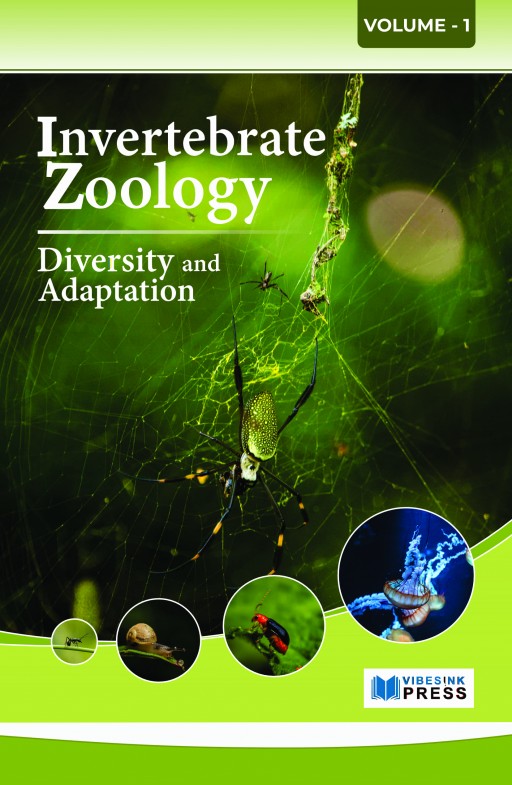
Invertebrate Zoology: Diversity and Adaptation provides an in-depth exploration of the vast and varied world of invertebrates, focusing on their diversity, morphology and adaptive strategies. The book examines the wide range of invertebrate species, from arthropods and mollusks to cnidarians and annelids, highlighting the unique features that enable them to thrive in diverse environments. It covers the evolutionary adaptations that have allowed invertebrates to occupy virtually every ecological niche on Earth, discussing topics like locomotion, feeding strategies, reproduction and defense mechanisms. This volume serves as a comprehensive resource for students and researchers in zoology, marine biology and ecology, offering valuable insights into the ecological roles and evolutionary significance of invertebrates in the natural world.
Scope & Subject Coverage
This book offers an in-depth exploration of invertebrate zoology, focusing on the diversity, biology, and adaptive strategies of invertebrate animals. It covers the broad range of invertebrate phyla, their ecological roles, and the evolutionary adaptations that enable them to thrive in various environments. The book integrates taxonomy, anatomy, physiology, and ecology to provide a comprehensive understanding of invertebrate life forms. It is designed for students, researchers, and professionals in zoology, biology, and environmental science. Topics to Cover: Introduction to Invertebrate Zoology, Basic Principles of Invertebrate Classification and Phylogeny, Overview of Invertebrate Diversity: Major Phyla and Lineages, Sponges (Phylum Porifera): Structure, Function, and Ecology, Cnidarians (Phylum Cnidaria): Corals, Jellies, and Anemones, Platyhelminthes: Flatworms, Tapeworms, and Flukes, Nematodes (Phylum Nematoda): Roundworms and Their Ecological Roles, Annelids (Phylum Annelida): Earthworms, Leeches, and Polychaetes, Arthropods (Phylum Arthropoda): Insects, Arachnids, Crustaceans, and Myriapods, Mollusks (Phylum Mollusca): Gastropods, Bivalves, Cephalopods, and Their Adaptations, Echinoderms (Phylum Echinodermata): Starfish, Sea Urchins, and Sea Cucumbers, Comparative Anatomy of Invertebrate Phyla: Structure and Function, Invertebrate Reproductive Strategies: Asexual and Sexual Reproduction, Behavioral Adaptations in Invertebrates: Feeding, Defense, and Communication, Physiological Adaptations: Osmoregulation, Respiration, and Circulation, Invertebrate Development: Embryology and Life Cycles, Ecological Roles of Invertebrates: Decomposers, Pollinators, and Food Web Dynamics, Adaptations to Extreme Environments: Deep Sea, Deserts, and High Altitudes, Invertebrate Symbiosis: Mutualistic and Parasitic Relationships, Invertebrate Immune Systems: Defense Mechanisms and Responses, Invertebrates as Indicators of Environmental Change and Pollution, Economic and Medical Importance of Invertebrates: Pests, Pollinators, and Disease Vectors, Conservation Issues: Threats to Invertebrate Diversity and Strategies for Preservation, Molecular Techniques in Invertebrate Taxonomy and Phylogeny, Experimental Approaches to Invertebrate Behavior and Physiology, Invertebrate Evolution: Major Evolutionary Trends and Adaptations, Comparative Invertebrate Neurobiology: Nervous Systems and Sensory Processes, Role of Invertebrates in Ecosystem Services: Soil Formation, Water Quality, and Nutrient Cycling, Invertebrate Fossil Record: Paleozoic to Modern Phylogeny, Future Directions in Invertebrate Zoology Research and Applications.
Resources
Publication Fee
E-Chapter Publication: ₹1,300 ₹800 (Foreign Authors: US$ 20)
Includes:
ISBN, Publication Certificate, Acceptance Letter & E-Chapter Publication.
Optional Hard Copy:
₹500 extra per copy (Foreign Authors: US$ 10).
Total with Hard Copy: ₹1,300 (Foreign Authors: US$ 30).


 Open for Submission